
Social & Population Research: Understanding the People Behind the Numbers
Introduction
India is one of the most diverse and dynamic societies in the world, and its population is always changing, which in turn brings with it new opportunities, challenges, and questions.
How are communities evolving?
What impact are demographic changes having on healthcare and education?
What do the patterns in population numbers indicate regarding India’s future?
Social and population research is important for understanding Bharat.
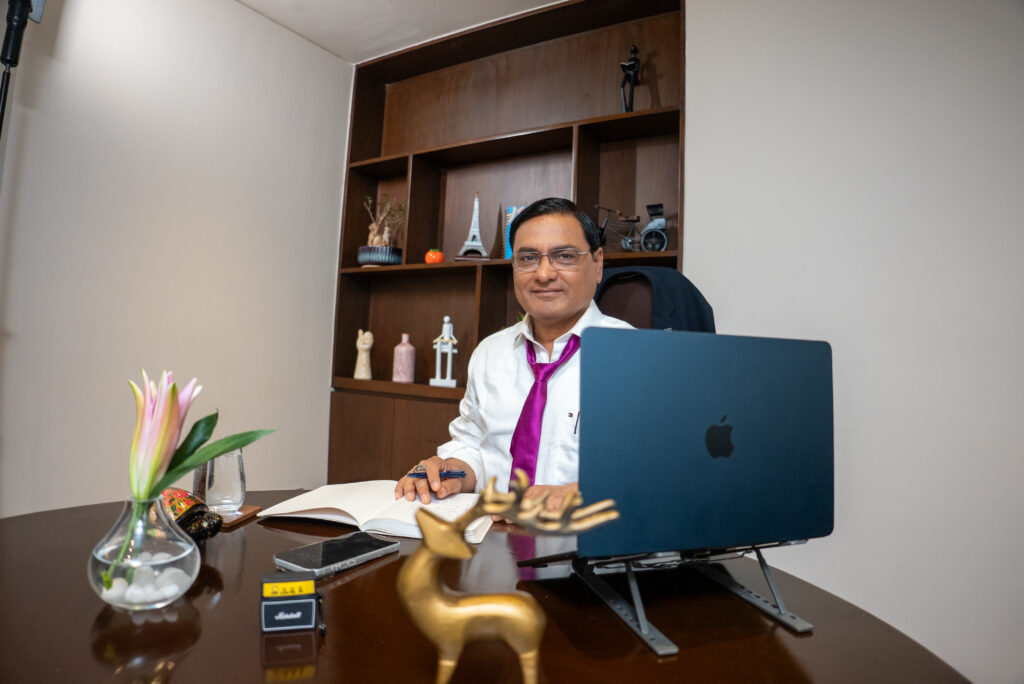
The demographic research carried out by Dr. Zaheer Khan is based on an approach which involves the use of data alongside a thorough understanding of people, communities, and social systems.
Why Population Research Matters
Population data consists of far more than just a set of figures.
It is able to show patterns relating to fertility, population growth, reproductive health, family structures, education, and other areas of social development.
If you look at them carefully, these patterns can enable researchers and organisations to gain an understanding of how society is changing.
Given that India is such a large country, it is essential to have this understanding.
Various states and communities may go through demographic transitions at different speeds. If we understand these differences, we can obtain a more detailed view of India’s development.
The Power of Large-Scale Research
A prominent feature of Dr. Khan’s career has been his work on large-scale demographic research and national survey systems.
His involvement with the India National Family Health Surveys, covering NFHS-2 and NFHS-3, included work in the areas of survey systems, field operations, training, monitoring, and the collection of large-scale demographic data.
The experiences gave one insight into how complex it is to understand India’s population in different areas.

Turning Complex Data Into Meaningful Insights
Large datasets may seem complicated.
The true value of research is in making the complex thing easy to understand.
Population research can help illuminate important areas such as:
- Maternal health
- Nutrition
- Reproductive health
- Population growth
- Education
- Gender equity
- Social development
- Healthcare accessibility
All of these areas have a connection with people’s day-to-day lives.
That is the reason why demographic research ought not to be confined to statistical analysis; it should contribute to a more profound understanding of society.
Research With a Human Perspective
For every percentage there is a group of people.
For every demographic trend there are families who make choices, communities which adjust to change, and individuals who experience social realities in different ways.
It is especially important to consider this human viewpoint when talking about population science.
Research is more meaningful to the point where it is able to link large-scale patterns with ordinary experiences.

From Population Science to National Development
Population trends have an effect on a great many aspects of development.
Healthcare systems should understand the changing needs of the population. Education systems should respond to the ways in which communities are evolving. Policymakers should have evidence on which to base their expectations of future difficulties and to enable them to plan properly.
The relevance of population research extends well beyond academic institutions.
It can help promote better discussions on governance, welfare, public health, education, and social development.
The ability to understand changes in population is therefore also equivalent to being able to understand India’s future.
Building an Evidence-Based Bharat
India’s entire development experience cannot be grasped by means of a single statistic.
It needs to take into account a number of different perspectives — demographic, social, economic, institutional, and human.
One of the strongest bases for bringing these different viewpoints together is provided by social and population research.
The importance of using evidence in order to understand society should be kept with people at the heart of the discussion, as shown by the work of Dr. Zaheer Khan.
As Bharat keeps on developing, being able to understand its people will always be essential for establishing better systems and more informed policies.