Public Health Intelligence: Using Evidence to Build a Healthier Bharat
Introduction
Public health is not merely a matter of hospitals, medicines, or treatment; it also involves understanding the conditions in which people live, identifying the problems that communities encounter, and setting up systems that are able to respond effectively.
Given that India is such a diverse and complicated country, public health needs more than just isolated measures; it needs accurate information, well-developed research systems, efficient institutions, and an understanding of how health problems differ from one community to another.
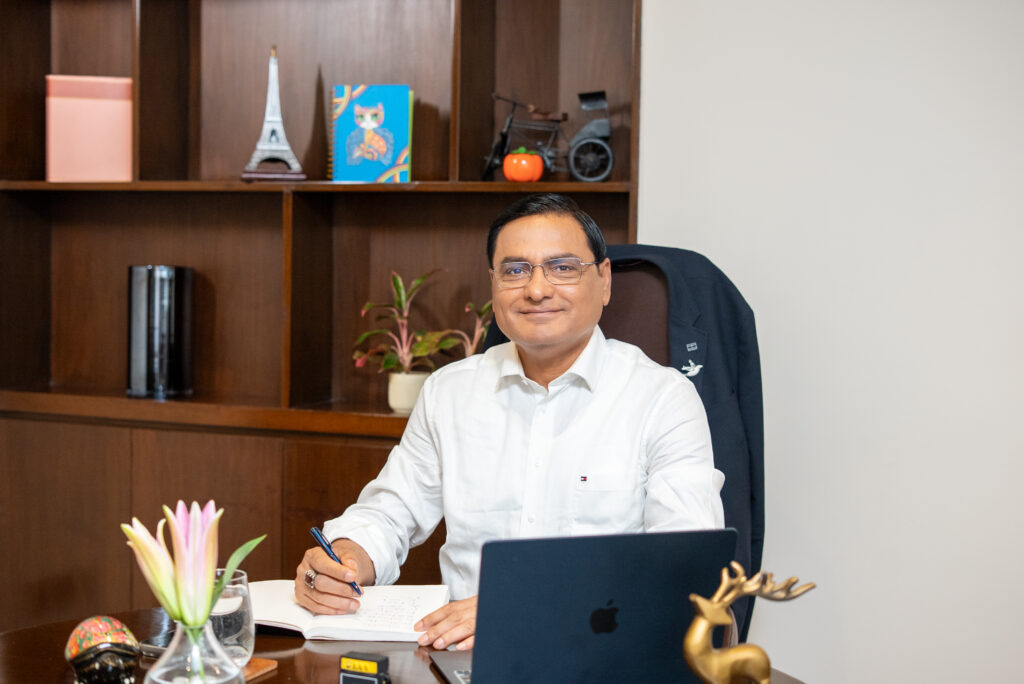
The way Dr. Zaheer Khan carries out his work exemplifies this more general approach to public health intelligence – one that links research, an understanding of demographic factors, field-level realities, and evidence-based decision-making.

Understanding Public Health Through Evidence
All health systems produce information, but the true difficulty lies in converting that information into useful understanding.
Health and demographic data can be used to detect patterns in maternal health, nutrition, reproductive health, immunization, sanitation, and general population well-being. However, it only becomes genuinely useful when it enables organizations to see where the problems lie and allows them to direct their resources more effectively.
It is here that public health intelligence becomes important.
It combines research, field information, demographic trends, and institutional knowledge in order to obtain a clearer understanding of the realities of public health.
For India this approach is especially important since there can be considerable differences in health outcomes between different regions, communities, and population groups.

From Research to Public Health Systems
Large-scale research can offer valuable insights into the way in which people experience healthcare and social development.
Dr. Khan’s career has been concerned with large-scale demographic research and with public health systems, and these experiences show that research can go beyond academic publications and play a role in the wider discussions concerning healthcare, nutrition, education, and social development.
The aim is not just to gather information.
What we want to achieve is to work out the meaning of the information.
If research is linked to policy and its implementation, then evidence can form the basis for more effective decision-making.
Why Health Intelligence Matters for Bharat
The health systems that India will need in the future must be capable of understanding change.
Population structures change. Communities evolve. Healthcare requirements emerge. New social and economic conditions affect people’s well-being.
A solid public health intelligence framework will enable organisations to detect such changes and respond more clearly.
It can support:
- Better understanding of population health
- Evidence-based policy development
- Stronger healthcare planning
- Improved public health awareness
- More informed institutional decision-making
- Greater focus on community realities

Beyond Numbers
Numbers can show us just how widespread a problem is, but they never always explain why the problem exists.
Which is why public health research should stay connected to people.
For every health statistic there is an individual, a family, or a community living through a certain situation. When you take this human aspect into account, research becomes more meaningful and enables decision-makers to consider factors beyond the statistics.
The way Dr. Khan looks at it shows this link between evidence and personal experience – a method which regards research not as an aim in itself but as a means of achieving significant public impact.
Building a More Informed Health Future
For Bharat to become healthier it needs more than just an expansion of its infrastructure; it also needs a deeper understanding, stronger evidence, and institutions which can convert knowledge into action.
Public health intelligence connects data to decision-making in a meaningful way.
What the future holds for India’s health systems will depend on how well research, evidence, institutions, and communities work together.
For Dr. Zaheer Khan, understanding these connections remains an important aspect of his contribution to a healthier, stronger, and more informed Bharat.